



Being overweight isn’t just a cosmetic concern; it can have a real, measurable impact on how you feel, function, and live day to day. Understanding the health risks of overweight matters more than ever, since modern lifestyles often combine less physical activity with easy access to calorie-dense food.
Carrying excess weight can affect nearly every system in the body, from the heart and joints to mental health, and the effects don’t stop at adulthood; childhood obesity is an increasingly common concern too. This guide breaks down what “overweight” actually means, the major overweight health risks to know about, the risk factors for being overweight and practical steps for prevention.
What Does “Overweight” Mean and How Is It Measured?
Being overweight generally means carrying more body fat than is considered healthy for your height, most commonly assessed using Body Mass Index (BMI). BMI is calculated from height and weight and in adults, a BMI between 25 and 29.9 typically falls into the “overweight” range, while 30 and above is classified as obese.
It’s worth noting that BMI has real limitations; it doesn’t distinguish between fat mass and muscle mass, so a muscular, athletic person can register as “overweight” on paper without carrying excess fat. Because of this, BMI is best treated as a starting screening tool rather than a complete diagnosis, and it’s usually considered alongside other measures like waist circumference or body composition.
For children, doctors don’t use adult BMI cutoffs. Instead, they use growth charts based on age and sex, since kids’ bodies naturally change as they grow. When a child weighs significantly more than others of a similar age and height, it may point to childhood obesity or an elevated risk of related health issues.
Catching weight concerns early, in both adults and children, generally makes prevention and treatment more effective.
Major Health Risks Linked to Being Overweight
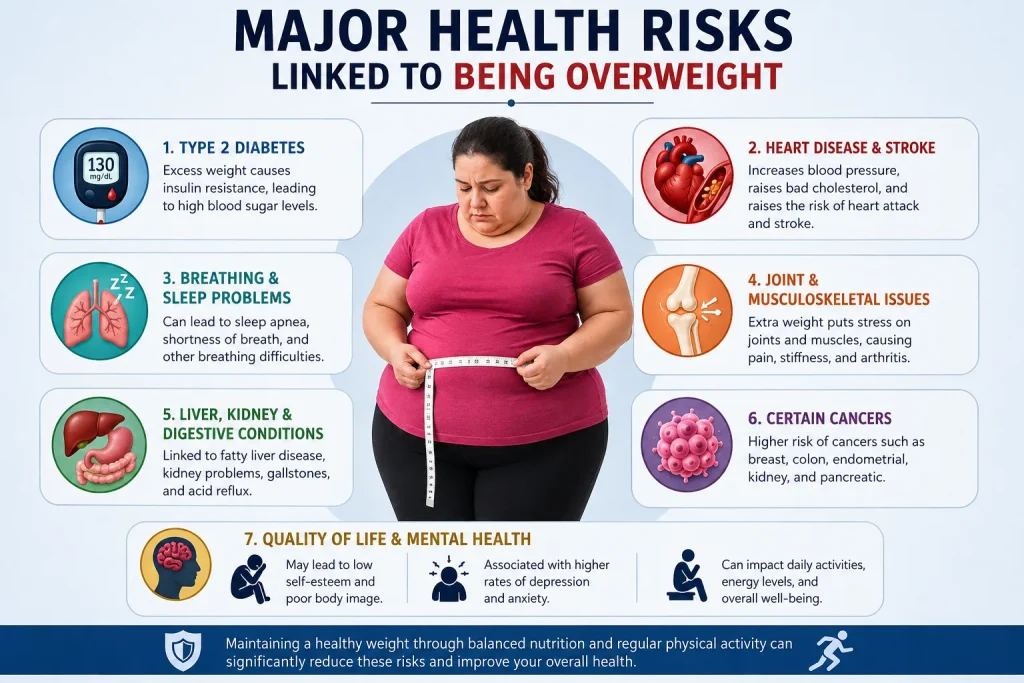
Carrying excess weight, particularly around the midsection, is associated with a higher risk of several serious health issues. Individual risk varies, but the overweight health risks below are among the most well-documented:
- Type 2 Diabetes: Excess weight is a major contributor to insulin resistance, which can lead to type 2 diabetes and, over time, complications like nerve damage, kidney problems, and cardiovascular disease.
- Heart Disease & Stroke: Extra fat around the heart and arteries is linked to unhealthy cholesterol levels, high blood pressure and inflammation, all recognized risk factors for heart attack and stroke.
- Breathing & Sleep Problems: Added weight around the chest and abdomen can make breathing more difficult, contributing to conditions like sleep apnea and more frequent asthma symptoms.
- Joint & Musculoskeletal Issues: Extra weight places added stress on joints, especially the knees and hips, which can accelerate the onset of osteoarthritis.
- Liver, Kidney & Digestive Conditions: Excess fat can accumulate in organs; fat buildup in the liver is linked to nonalcoholic fatty liver disease and excess weight also raises the risk of gallbladder and kidney issues.
- Certain Cancers: Research has linked excess weight to a higher risk of several cancers, including breast, colon, kidney and pancreatic cancer, with inflammation, hormonal changes, and insulin resistance considered possible contributing factors.
- Quality of Life & Mental Health: Beyond the physical risks, being overweight can affect energy levels and make everyday tasks more physically demanding. It’s also associated with higher rates of low mood, anxiety, and reduced self-esteem, which can make healthy changes harder to sustain.
These health issues with being overweight underscore why early recognition and support matter; the next section looks at what actually drives weight gain in the first place.
Risk Factors for Being Overweight
Overweight and obesity are rarely caused by one single thing; they’re usually the result of several factors interacting over time. Understanding the main risk factors for being overweight can help individuals and families take more targeted, effective steps.
| Key Factor | How It Contributes to Weight Gain | Why It Matters for Health |
| Lack of Physical Activity | Extended sitting and low daily movement reduce calorie burn, leading to gradual weight gain over time. | Raises the risk of metabolic conditions and lowers overall fitness and cardiovascular health. |
| Genetic Factors | Certain genes influence appetite regulation, fat storage, and metabolic rate, making weight gain more likely for some people. | Genetic predisposition can compound the effects of an inactive lifestyle or poor diet. |
| Psychological Factors | Stress, anxiety, and emotional eating can lead to frequent overeating or reliance on unhealthy food choices. | Closely tied to mental health and can create a difficult cycle to break without support. |
| Dietary Patterns & Environment | Easy access to calorie-dense, low-nutrient foods, combined with limited opportunities for activity, encourages excess intake. | Builds long-term habits that raise the risk of overweight and related chronic disease. |
| Sleep & Lifestyle Habits | Poor sleep quality can disrupt hunger-regulating hormones and reduce motivation for physical activity. | Consistently linked to higher rates of weight gain and metabolic disruption. |
Recognizing these risk factors is the first step; combined with supportive lifestyle changes, they can meaningfully reduce long-term health risk.
Childhood Obesity: Causes and Consequences
When a child carries excess weight, it’s rarely just a passing phase; it can carry long-term health implications. Childhood obesity has been linked to conditions once considered mostly “adult” issues, including type 2 diabetes, high blood pressure, breathing difficulties and joint problems.
Compared to previous generations, many children today are less physically active and are exposed to calorie-dense food options from an earlier age. Genetics can also play a meaningful role in a child’s individual risk, often interacting with environment and lifestyle.
Beyond the physical effects, children who are overweight may also be more vulnerable to bullying or social exclusion, which can affect confidence and mental well-being well into adulthood.
Early intervention tends to help the most; family-based activity, balanced nutrition and regular monitoring from a pediatrician or healthcare provider can support healthier growth and reduce the risk of complications later in life.
Prevention, Common Tests and When to Get Checked

1. Sustainable Weight Management: A well-rounded approach typically combines a balanced diet with regular physical activity. Registered dietitians and certified fitness professionals can help design a plan suited to individual needs and lasting results usually come from gradual, sustainable changes (more vegetables and whole grains, consistent movement) rather than short-term fixes.
2. Common Screening Tests: Routine testing can help catch weight-related health issues early. Tests commonly used include:
- Fasting blood glucose: screens for prediabetes and diabetes
- Lipid panel: checks cholesterol and triglyceride levels
- Thyroid function tests: assess metabolic health
- Liver enzyme tests: evaluate liver function
3. Regular Check-Ups: Periodic visits to a healthcare provider help ensure weight, blood pressure, and any emerging complications are monitored consistently, making it easier to address concerns early rather than after they become more serious.
Mental Health and Quality of Life
Living with excess weight can affect mental as well as physical health. Depression, anxiety and body image concerns can stem from both internal emotional struggles and external stigma or bias and these experiences can make it harder to start or stick with healthier habits.
Day-to-day quality of life, how someone feels and functions, often declines with chronic pain, fatigue or reduced mobility. Outcomes tend to improve with a holistic approach that treats mental and physical health together; counseling, peer support and gradual lifestyle changes can all make a meaningful difference.
Final Thoughts
Understanding the health risks of overweight and the risk factors that contribute to it is the first step toward meaningful, lasting change. While excess weight can raise the risk of conditions like diabetes, heart disease, breathing issues and psychological distress, even small, consistent changes to daily habits can make a real difference over time.
The most effective approach usually combines regular check-ups, a balanced diet, consistent physical activity, and attention to mental well-being. If weight is a concern, the best step is speaking with a healthcare professional early, well before complications become serious.
This article is for general informational purposes and isn’t a substitute for professional medical advice. Talk to a qualified healthcare provider about any concerns regarding your weight or health.
FAQ: Health Risks of Overweight
When should I see a doctor about weight-related health concerns?
It’s generally best to speak with a healthcare provider as soon as weight becomes a concern, rather than waiting for complications to develop. Regular check-ups, along with routine tests like blood glucose and cholesterol screening, can help catch issues early.
Can being overweight affect mental health?
Yes. Overweight health risks aren’t limited to physical conditions; excess weight is associated with higher rates of anxiety, depression and lower self-esteem, which can in turn make it harder to build and maintain healthy habits.
What health issues are linked with being overweight in childhood?
Health issues with being overweight in childhood can include type 2 diabetes, high blood pressure, breathing difficulties, and joint problems, conditions that were historically seen mostly in adults. Emotional and social effects, including lower self-esteem and vulnerability to bullying, are also common.
What are five major overweight risks to be aware of?
Five of the most significant overweight risks are type 2 diabetes, heart disease and stroke, high blood pressure, joint and mobility problems and mental health effects such as depression or anxiety.
What are the risk factors for being overweight?
The main risk factors for being overweight include lack of physical activity, genetic predisposition, psychological factors like stress or emotional eating, dietary patterns and food environment, and poor sleep habits. These factors often interact, which is why sustainable weight management usually addresses more than one area at once.
What are the health risks of being overweight?
Being overweight raises the risk of several health conditions, including type 2 diabetes, heart disease, high blood pressure, joint problems, breathing disorders and certain cancers. It can also affect mental well-being and reduce overall quality of life by limiting mobility and daily functioning.