


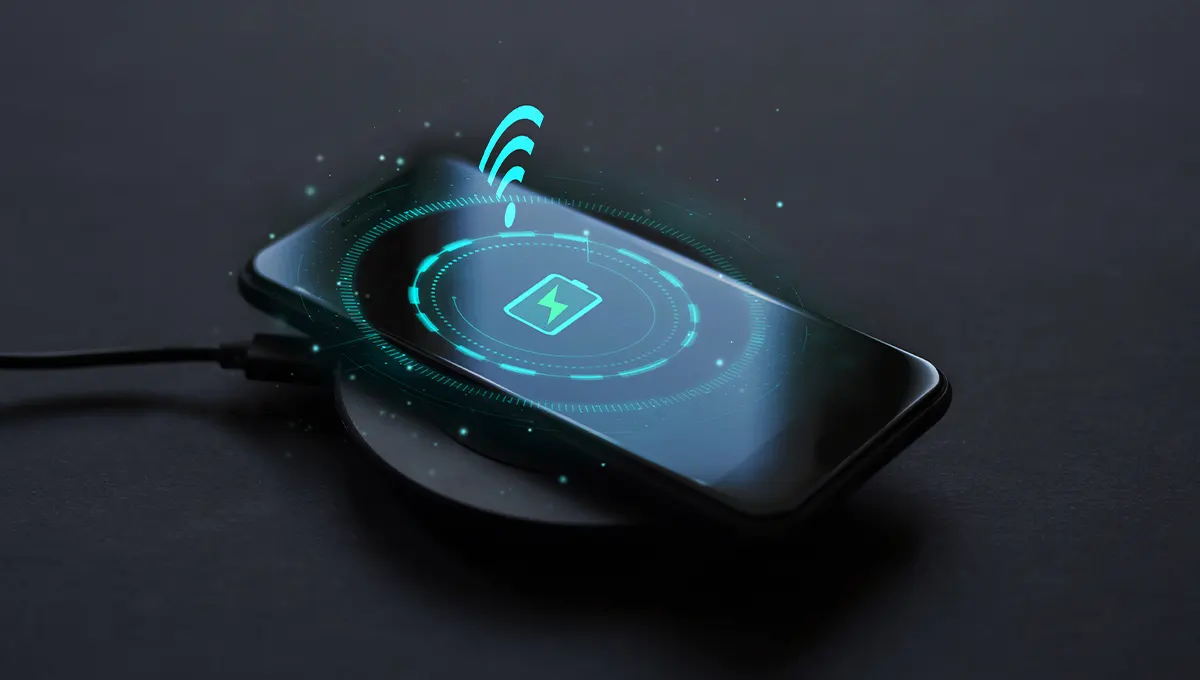
Wireless Charging Power The Complete Guide to Power Banks, Efficiency and Safety
Picture this: Your phone dies as you’re rushing out the door. You grab your wireless charging power bank, snap it magnetically onto your device, and you’re instantly powered up with no cables, no fumbling, just convenience.
This seamless experience showcases how portable charging technology has evolved, yet understanding what’s beneath the surface helps you make smarter purchasing decisions.
From electromagnetic induction basics to efficiency trade-offs, critical safety concerns, and marketplace scams, knowing what truly matters protects your investment and ensures optimal performance.
Whether you’re buying your first power bank or upgrading your existing gear, this comprehensive guide covers the essential factors: technology fundamentals, capacity considerations, fast charging capabilities.
How Wireless Charging Power Works
Wireless charging power uses electromagnetic induction alternating current in a transmitting coil creates a magnetic field generating current in a receiving coil.
The Qi standard dominates consumer markets, with newer Qi2 and Qi2.2 offering enhanced magnetic alignment and faster speeds up to 25W versus earlier 5-15W models.
Operating at 85-140 kHz, the technology converts power multiple times between AC and DC. This conversion plus the physical coil gap creates 15-40% efficiency losses.
Modern power banks integrate intelligent circuits managing voltage, preventing overheating, and optimizing transfer based on device needs. Power banks supporting specific standards Qi, Qi2, or proprietary systems determine device compatibility.
Newer Qi2.2 models incorporate stronger magnets and improved alignment, delivering faster charging with better thermal management. Understanding these fundamentals explains why wireless options achieve 60-85% efficiency versus wired charging’s 85-95% rate.
What to Look For Wireless Charging Power Banks
- Capacity Power Bank Considerations :- Capacity, measured in mAh, decides how many device charges you get. A 10,000 mAh power bank typically delivers about two phone charges after losses. Smaller banks suit daily use, while higher capacities offer more power with added size.
- Fast Charging Power Bank Capabilities:- Fast charging power banks support higher wireless and wired outputs, but real speed depends on device compatibility and charging standards. Advanced models use efficient components and thermal management to deliver faster charging without excessive heat or performance drop.
- Solar Power Bank for Camping:- Solar power banks recharge slowly due to small panels and sunlight dependency. They work best as emergency backups rather than primary power sources. For reliable outdoor charging, high-capacity traditional power banks remain the more practical choice.
Wireless vs Wired The Efficiency Trade-Off
Wireless convenience comes with measurable efficiency costs. Systems lose 15-40% more energy than wired alternatives, primarily from electromagnetic loss across air gaps, coil resistance, and multiple power conversions.
This means longer charging times and increased heat. Wired charging delivers power directly through conductive connections, minimizing conversions and waste.
USB-C cables transfer power at 95% efficiency while keeping devices cooler. For rapid charging needs, cables remain superior. However, wireless excels in daily convenience.
Desk charging, nightstand setups, and car mounts benefit from cable-free operation where speed matters less. Magnetic alignment in Qi2 systems reduces positioning problems, improving experience and efficiency.
Choose wired for speed and efficiency road trips, quick top-ups, multiple devices. Choose wireless for convenience, cable-free aesthetics, or on-the-go charging while using devices.
Overheating Issues and Safety With Wireless Charging Power
- Understanding Heat Generation:- Wireless charging power produces more heat than wired charging due to energy transfer losses. Coil misalignment, thick cases, and prolonged charging raise temperatures further, which can accelerate battery wear and reduce long-term device performance despite built-in thermal controls.
- Critical Safety Features:- Reliable power banks include thermal monitoring, foreign object detection, overcurrent protection, and short-circuit safeguards. Certified devices follow defined safety standards, but recent recalls show why choosing trusted brands with strong quality control remains essential for minimizing overheating and fire risks.
- Practical Safety Tips:- Charge devices on hard, ventilated surfaces, avoid heavy phone usage during charging, and remove thick cases that trap heat. If a power bank or phone becomes unusually hot, stop charging immediately to prevent damage or potential safety hazards.
Marketplace Scams and Buying Smart
Online marketplaces created opportunities for counterfeiters. Fake power banks feature exaggerated claims 500,000 mAh smartphone-sized devices are physically impossible.
Researching wireless charging power products thoroughly prevents costly mistakes. Legitimate 10,000 mAh banks match smartphone dimensions; higher capacities require proportionally larger sizes.
Common red flags include missing brand names, exceptionally low prices, poor packaging with blurry images or misspellings, no certification markings (Qi, FCC, UL), unrealistic specifications like 120W output from $18 devices, and generic descriptions.
Some counterfeiters create fake QR codes leading to spoof verification websites. Validate products by purchasing from authorized retailers, checking certification logos, reading verified reviews, comparing packaging against manufacturer images, and testing performance.
Counterfeit products ranked fourth among top scam categories in 2026. Protect yourself by buying from reputable retailers with return policies, comparing prices (if too good to be true, it probably is), verifying serial numbers through manufacturer websites, and reporting suspicious sellers. Consumer vigilance remains essential.
Energy Saving Tips With Wireless Charging Power
Discover how wireless charging power enhances convenience, efficiency, and safety while helping you choose the right power bank for everyday use.
- Unplug When Not in Use: Wireless chargers draw phantom power when idle. Disconnecting when not actively charging reduces energy waste.
- Optimize Battery Levels: Charge devices between 20–80% and avoid overnight charging to extend battery lifespan.
- Choose Efficient Chargers: Use Energy Star–rated power banks and chargers for better energy efficiency.
- Charge Multiple Devices Smartly: Utilize power banks with multiple outputs rather than several separate chargers.
- Maintain Moderate Temperatures: Charge on hard, cool surfaces (60–75°F) to reduce heat loss and improve efficiency.
- Enable Battery Optimization: Use device features that learn usage patterns to optimize charging cycles.
Maximize your device’s battery life and safety by selecting quality wireless charging power banks and following smart energy practices.
Conclusion
Wireless charging power delivers unmatched convenience for mobile lifestyles when you understand the technology, recognize efficiency trade-offs, and prioritize safety. Selecting the right wireless charging power solution requires careful evaluation.
The foundation for positive experiences requires certified products from reputable manufacturers with realistic specifications and robust thermal management. Recent recalls demonstrate that cutting corners on price often leads to safety hazards and disappointing performance.
Choose wisely based on your actual needs whether a compact 5,000 mAh daily companion or high-capacity 27,000 mAh travel solution. Verify certifications, research thoroughly, and purchase from authorized retailers.
Take action today: Compare models from established brands, check recent safety recalls, read verified customer reviews, and invest in quality over bargain pricing. Your devices deserve reliable power, and you deserve peace of mind.
Frequently Asked Questions
- Is 10W or 15W better for wireless charging?
15W wireless charging is better, offering faster charging speeds than 10W. However, your device must support 15W output to benefit from increased performance. - How much power is a wireless charger?
Wireless chargers typically output 5W to 25W. Entry-level models offer 5-10W, standard chargers provide 15W, while premium Qi2.2 models deliver up to 25W charging power. - Is a 20W or 30W charger faster?
30W chargers are faster than 20W models, delivering more power simultaneously. However, actual charging speed depends on your device’s maximum supported input wattage capacity. - Why are wireless chargers only 15W?
Most wireless chargers offer 15W due to Qi standard limitations and heat management concerns. Newer Qi2.2 technology now enables 25W wireless charging with improved efficiency.