



Saving money becomes much easier when you have a clear purpose. Whether you’re preparing for an emergency, planning a vacation, replacing an old laptop, or building a down payment for a car, setting short term savings goals gives every dollar a job. Instead of wondering where your money goes each month, you create a plan that helps you stay on track and avoid unnecessary debt.
Unlike long-term financial objectives that may take decades to achieve, short-term goals focus on needs you expect to meet within the next few months or years. Because you’ll need access to the money relatively soon, choosing safe savings and investment options is just as important as deciding how much to save.
This article explains how short term savings goals work, why they matter, the best ways to build your savings, and practical strategies that can help you reach your financial targets with confidence.
What Are Short-Term Savings Goals?
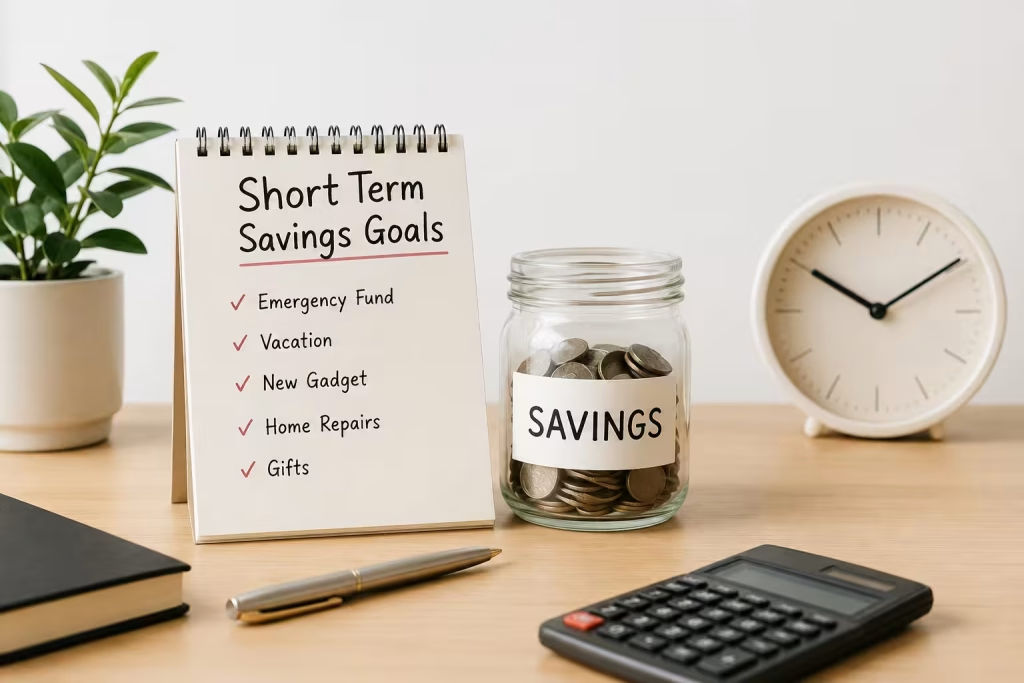
Short-term savings goals are financial objectives you plan to achieve within a few months to three years. These goals usually involve expenses you know are coming or unexpected situations that require quick access to cash.
Unlike long-term investments that focus on maximizing returns over many years, short-term savings prioritize security, liquidity, and stability. Since you’ll likely need the money soon, protecting your savings is generally more important than pursuing high-risk investments.
Examples of short-term savings goals include:
- Building an emergency fund
- Paying for a family vacation
- Purchasing a new smartphone or laptop
- Covering medical expenses
- Saving for home repairs
- Funding holiday shopping
- Creating a wedding budget
- Paying for professional certifications
- Making a vehicle down payment
Having specific savings goals helps transform vague intentions into measurable financial plans.
Why Short-Term Savings Goals Matter?
Many people focus on earning more money but overlook the importance of planning how they’ll use it. Without defined financial goals, it’s easy to spend impulsively or rely on credit cards when unexpected expenses arise.
Setting short term savings goals offers several benefits.
Better Financial Security
Unexpected expenses can happen at any time. A dedicated savings fund allows you to manage emergencies without borrowing money or disrupting your long-term financial plans.
Reduced Financial Stress
Knowing you already have money set aside for planned expenses provides peace of mind and helps reduce anxiety during unexpected situations.
Less Dependence on Debt
Using savings instead of credit cards or personal loans helps avoid high-interest payments and keeps your finances healthier over time.
Improved Spending Habits
Saving toward a specific goal encourages more intentional spending decisions. Instead of making impulse purchases, you’ll naturally prioritize expenses that align with your financial objectives.
Stronger Financial Discipline
Successfully achieving smaller financial milestones builds confidence and creates habits that support larger goals, such as buying a home or planning for retirement.
Short Term vs Long Term Savings Goals
Understanding the difference between short-term and long-term financial planning helps you choose the right savings strategy.
| Feature | Short Term Savings Goals | Long Term Savings Goals |
| Timeframe | Less than 3 years | More than 3 years |
| Primary Objective | Preserve money | Grow wealth |
| Risk Level | Low | Moderate to High |
| Liquidity | High | Lower |
| Typical Options | Savings accounts, money market accounts, certificates of deposit | Retirement accounts, mutual funds, index funds, stocks |
| Examples | Emergency fund, vacation, home repairs | Retirement, children’s education, buying a home |
Because short-term savings have a limited timeline, protecting your money should take priority over chasing higher returns.
Common Types of Short-Term Savings Goals
Everyone’s financial priorities are different but most short-term goals fall into a few common categories.
| Goal | Purpose | Recommended Timeframe |
| Emergency Fund | Cover unexpected expenses | Ongoing |
| Medical Expenses | Pay deductibles or treatments | 3 to 12 months |
| Vacation | Finance travel without debt | 6 to 18 months |
| Home Repairs | Cover maintenance or renovations | 6 to 24 months |
| Vehicle Expenses | Down payment or repairs | 6 to 24 months |
| Education | Certifications or short courses | 6 to 24 months |
| Holiday Shopping | Seasonal spending | 6 to 12 months |
| Technology Purchases | Laptop, phone or equipment | 3 to 12 months |
Each goal has a different timeline but they all benefit from consistent monthly contributions and careful planning.
How to Set Achievable Short-Term Savings Goals
A successful savings plan starts with realistic expectations and a structured approach.
Step 1: Identify Your Goal
Be specific about what you’re saving for.
Instead of saying:
“I want to save money.”
Say:
“I want to save $2,400 for an emergency fund within 12 months.”
Specific goals are easier to measure and track.
Step 2: Determine the Target Amount
Estimate the total amount you’ll need by researching actual costs rather than making rough guesses.
For example:
- Emergency fund: Three months of essential expenses
- Vacation: Transportation, accommodation, food, and activities
- Home repairs: Contractor estimates
- Electronics: Current retail prices
Having a realistic target prevents under-saving.
Step 3: Set a Deadline
Every financial goal should include a timeline.
Examples include:
- Six months
- Twelve months
- Eighteen months
- Two years
A clear deadline creates urgency and helps maintain motivation.
Step 4: Calculate Monthly Savings
Divide your target amount by the number of months available.
| Goal | Amount Needed | Timeframe | Monthly Savings |
| Emergency Fund | $3,600 | 12 months | $300 |
| Vacation | $1,800 | 9 months | $200 |
| Laptop | $1,200 | 8 months | $150 |
Breaking large goals into smaller monthly targets makes them feel much more achievable.
Step 5: Automate Your Savings
One of the simplest ways to stay consistent is to automate transfers into a dedicated savings account immediately after each paycheck.
Automation helps:
- Eliminate missed contributions
- Reduce unnecessary spending
- Build consistent saving habits
- Keep progress on schedule
Even modest automatic transfers can produce significant results over time.
Step 6: Track Your Progress Regularly
Review your savings at least once a month.
Ask yourself:
- Am I meeting my monthly target?
- Have my expenses changed?
- Can I increase my savings?
- Do I need to adjust my timeline?
Monitoring your progress helps you identify potential challenges early and stay committed to your financial goals.
Build a Financial Plan That Works
A savings goal is only effective when supported by a realistic financial plan. Start by reviewing your monthly income and essential expenses to understand how much you can comfortably save. If your budget feels tight, look for opportunities to reduce discretionary spending, negotiate recurring bills, or direct extra income from bonuses, freelance work, or tax refunds toward your savings goals.
It’s also important to prioritize your goals. For example, building an emergency fund should generally come before saving for a vacation or luxury purchase. By focusing on one or two priorities at a time, you’ll make steady progress without stretching your budget too thin.
The most successful savers don’t rely on motivation alone; they build systems that make saving automatic and consistent. With clear goals, realistic timelines and regular reviews, short-term savings become a practical habit rather than an occasional effort.
Best Ways to Save for Short-Term Goals
Once you’ve established your financial objective, the next step is choosing where to keep your money. Since you’ll need access to these funds within a relatively short period, preserving your savings should take priority over chasing high investment returns.
The best savings options balance security, liquidity and modest growth, allowing your money to remain available when you need it.
High Yield Savings Accounts
Best for: Emergency funds and everyday savings
A high yield savings account is one of the safest places to keep money for short term savings goals. Compared to traditional savings accounts, these accounts typically offer higher interest rates while allowing quick access to your funds.
Advantages
- Low risk
- Easy access to money
- Earns interest daily or monthly
- Suitable for emergency funds
- Often insured by government-backed deposit protection programs where applicable
Considerations
- Interest rates may change over time.
- Returns are generally lower than long-term investments.
Ideal for: Goals within the next 6 to 24 months.
Money Market Accounts
Best for: Larger savings balances
Money market accounts combine many benefits of savings and checking accounts. They often provide competitive interest rates while offering limited check-writing or debit card access.
Advantages
- Higher interest than many standard savings accounts
- High liquidity
- Low investment risk
- Convenient access to funds
Considerations
- Some accounts require higher minimum balances.
- Monthly transaction limits may apply.
Ideal for: Emergency savings and planned expenses.
Certificates of Deposit (CDs)
Best for: Fixed savings goals
Certificates of Deposit allow you to deposit money for a predetermined period in exchange for a guaranteed interest rate.
Because your money remains locked until maturity, CDs generally offer better returns than traditional savings accounts.
Advantages
- Guaranteed interest rate
- Very low risk
- Predictable returns
- Helps prevent unnecessary spending
Considerations
- Early withdrawal penalties may apply.
- Less flexibility compared to savings accounts.
Ideal for: Goals with a fixed timeline, such as purchasing a vehicle or paying tuition.
Treasury Bills (T-Bills)
Best for: Capital preservation
Treasury Bills are short-term government securities that mature in a few weeks to one year. They are considered one of the safest investment options because they are backed by the issuing government.
Advantages
- Extremely low risk
- Predictable returns
- Suitable for conservative investors
Considerations
- Returns may be modest.
- Funds remain invested until maturity unless sold earlier.
Ideal for: Investors seeking maximum safety.
Short Duration Bond Funds
Best for: Slightly higher return potential
Short-duration bond funds invest primarily in bonds with relatively short maturities. They generally experience less price volatility than long-term bond funds while offering potentially better returns than savings accounts.
Advantages
- Potentially higher returns
- Diversified investments
- Professional fund management
Considerations
- Returns are not guaranteed.
- Market fluctuations may affect value.
Ideal for: Investors comfortable with a small amount of market risk.
Cash Management Accounts
Best for: Flexible money management
Cash management accounts combine features of checking, savings, and investment accounts. Many provide competitive interest rates and digital tools that simplify budgeting and saving.
Advantages
- High liquidity
- Competitive interest
- Easy online access
- Integrated financial management tools
Considerations
- Features vary by provider.
- Some accounts include transaction limitations.
Savings Options Comparison
| Savings Option | Risk Level | Liquidity | Expected Return | Best For |
| High Yield Savings Account | Very Low | Excellent | Low to Moderate | Emergency funds |
| Money Market Account | Very Low | Excellent | Moderate | Everyday savings |
| Certificate of Deposit | Very Low | Limited until maturity | Moderate | Fixed savings goals |
| Treasury Bills | Very Low | Good | Moderate | Capital preservation |
| Short Duration Bond Fund | Low | Moderate | Moderate | Slight growth potential |
| Cash Management Account | Very Low | Excellent | Moderate | Flexible savings |
No single option works for everyone. Your ideal choice depends on how soon you’ll need the money, your comfort with risk and your financial priorities.
Monthly Savings Strategies That Work
Building savings is less about making large deposits and more about creating consistent habits. Small, regular contributions often lead to significant progress over time.
Pay Yourself First
Treat savings like a mandatory monthly expense.
Instead of saving whatever remains at the end of the month, transfer money into your savings account immediately after receiving your income.
This approach helps ensure your financial goals remain a priority.
Automate Your Savings
Automatic transfers remove the temptation to spend money before saving it.
Many banks allow recurring transfers on payday, making the saving process effortless.
Automation also helps build long-term financial discipline.
Follow the 50/30/20 Budget
A simple budgeting framework can improve saving consistency.
- 50% for essential expenses
- 30% for discretionary spending
- 20% for savings and debt repayment
If your goal has a short deadline, consider temporarily increasing the percentage allocated to savings.
Reduce Small Everyday Expenses
Minor spending habits often have a bigger impact than expected.
Examples include:
- Preparing coffee at home
- Canceling unused subscriptions
- Planning grocery shopping
- Cooking meals instead of ordering takeout
- Comparing insurance or utility plans
Redirecting these savings toward your financial goal can significantly shorten your timeline.
Save Windfalls
Unexpected income provides an excellent opportunity to accelerate your progress.
Consider saving part or all of:
- Tax refunds
- Annual bonuses
- Cash gifts
- Freelance income
- Side hustle earnings
- Cashback rewards
These occasional deposits can help you reach your target much sooner.
Practical Savings Examples
Real-life scenarios make financial planning easier to understand.
Example 1: Emergency Fund
Sarah wants to build a $6,000 emergency fund within two years.
Monthly savings needed: $250 per month
She automates the transfer on payday and keeps the money in a high-yield savings account for easy access.
Example 2: Family Vacation
Michael plans a vacation costing $2,400 in twelve months.
Required monthly savings: $200
By reducing dining-out expenses and directing his annual tax refund toward the goal, he reaches his target ahead of schedule.
Example 3: Laptop Purchase
Emma needs a new laptop costing $1,500 in ten months.
Monthly savings target: $150
She opens a separate goal-specific savings account to avoid spending the money on everyday expenses.
Sample Monthly Savings Plan
| Goal | Total Needed | Timeline | Monthly Savings |
| Emergency Fund | $3,600 | 12 months | $300 |
| Vacation | $2,400 | 12 months | $200 |
| Car Repairs | $1,200 | 8 months | $150 |
| Home Improvements | $4,800 | 24 months | $200 |
| New Laptop | $1,500 | 10 months | $150 |
Breaking large financial goals into manageable monthly contributions makes them less overwhelming and easier to maintain.
Common Mistakes to Avoid
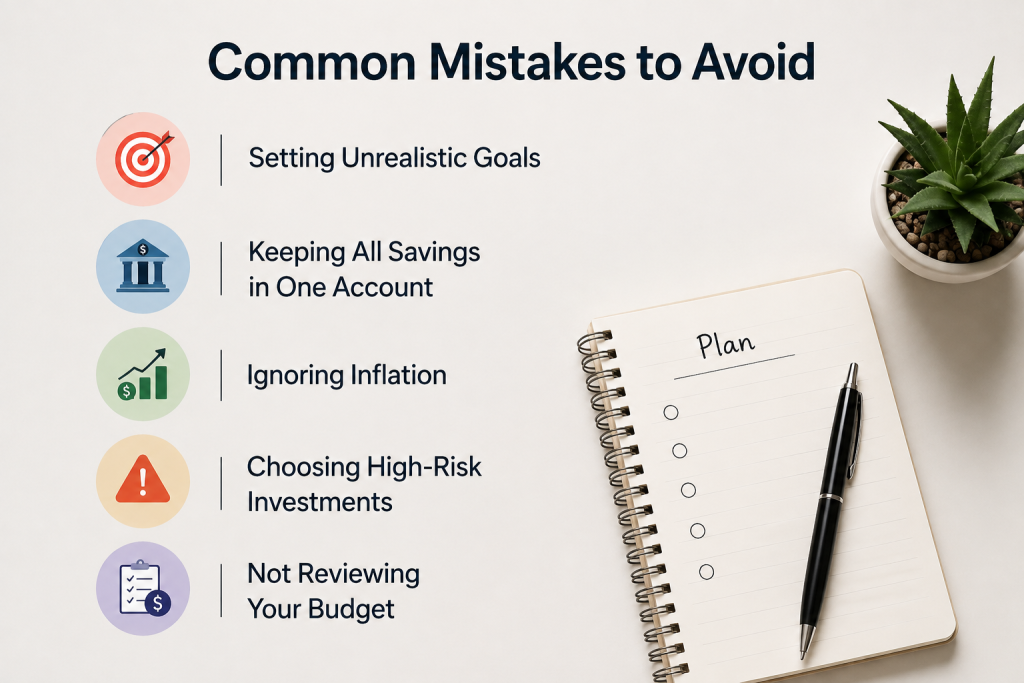
Even a well-planned savings strategy can lose momentum if common mistakes go unnoticed.
Setting Unrealistic Goals
Trying to save more than your budget allows often leads to frustration and abandoned plans. Set targets that are ambitious yet achievable based on your income and expenses.
Keeping All Savings in One Account
Using a single account for multiple goals makes it difficult to track progress and increases the temptation to spend money intended for another purpose.
Dedicated savings accounts for each goal improve organization and accountability.
Ignoring Inflation
While short-term savings are less affected by inflation than long-term investments, rising prices can still reduce your purchasing power.
Review your target amount periodically and adjust your savings plan if costs increase.
Choosing High-Risk Investments
Money needed within the next few months or years generally shouldn’t be invested in highly volatile assets.
Protecting your savings is usually more important than pursuing maximum returns over a short period.
Not Reviewing Your Budget
Income and expenses change over time.
Review your budget every month to identify opportunities to increase savings or adjust your goals without disrupting your financial stability.
By combining the right savings account with consistent monthly contributions and realistic financial planning, you can make steady progress toward your short-term savings goals while minimizing unnecessary financial stress.
How Much Should You Save?
There’s no universal amount that works for everyone. The right savings target depends on your income, expenses, lifestyle, and the purpose of your goal. Instead of focusing on a specific number, determine how much you can save consistently without affecting essential living expenses.
A practical approach is to calculate your target amount first and then divide it by the number of months available to reach your goal.
For example:
| Savings Goal | Target Amount | Timeframe | Monthly Savings |
| Emergency Fund | $3,600 | 12 months | $300 |
| Vacation | $2,400 | 12 months | $200 |
| New Furniture | $1,800 | 9 months | $200 |
| Car Down Payment | $6,000 | 24 months | $250 |
Even small monthly contributions can produce meaningful results when you stay consistent.
Prioritize Multiple Savings Goals
Many people save for more than one objective at the same time. The key is deciding which goals deserve attention first.
A simple order of priority is:
1. Emergency Fund
Unexpected expenses can happen at any time. Building an emergency fund should usually be your highest priority because it helps protect you from relying on high-interest debt.
2. High-Priority Upcoming Expenses
Focus next on expenses with fixed deadlines, such as:
- Insurance premiums
- Tuition fees
- Home repairs
- Vehicle maintenance
- Medical expenses
3. Lifestyle Goals
After covering essential needs, begin saving for optional goals like:
- Vacations
- Electronics
- Holiday shopping
- Home décor
- Entertainment
Prioritizing your goals prevents financial strain while helping you stay organized.
How Inflation Affects Short-Term Savings
Inflation gradually reduces the purchasing power of money. Although its impact is greater on long-term investments, it can still affect short-term financial goals, especially when prices rise quickly.
For example, if you’re saving for a home renovation over the next two years, the cost of materials and labor may increase before you reach your target.
To reduce inflation’s impact:
- Review your savings goal every few months.
- Adjust your monthly contribution if prices increase.
- Choose savings options that earn competitive interest.
- Avoid leaving large amounts of idle cash in accounts with little or no return.
Regular reviews help ensure your savings remain aligned with real-world costs.
Tips to Stay Consistent With Your Savings Plan
Saving money is more about consistency than perfection. Small habits repeated over time often produce better results than occasional large deposits.
Set Milestones
Breaking large goals into smaller milestones makes progress easier to track and keeps motivation high.
For example:
- Save your first $500.
- Reach 25% of your goal.
- Reach 50%.
- Reach 75%.
- Achieve your final target.
Celebrating each milestone can reinforce positive financial habits.
Review Your Budget Monthly
Life changes quickly. Salary increases, new expenses, or unexpected events can all affect your savings plan.
Review your budget each month and adjust your contributions when necessary.
Avoid Lifestyle Inflation
As income grows, many people increase their spending just as quickly.
Instead of spending every raise or bonus, consider directing part of it toward your savings goals.
Keep Savings Separate
Using dedicated savings accounts for different goals makes it easier to monitor progress and reduces the temptation to spend money intended for another purpose.
Stay Flexible
Unexpected events may require you to pause or reduce contributions temporarily.
Rather than abandoning your plan altogether, adjust your timeline and continue saving when your financial situation improves.
Conclusion
Short-term savings goals are one of the simplest ways to improve your financial well-being. Whether you’re preparing for an emergency, planning a major purchase, or saving for an upcoming event, having a clear goal makes it easier to stay focused and make informed financial decisions.
The most successful savers don’t rely on willpower alone. They create realistic budgets, automate their savings, monitor progress regularly, and adjust their plans as circumstances change. By combining these habits with secure savings options and practical timelines, you can reach your financial goals with greater confidence and less stress.
Every financial journey starts with a single step. Choose one achievable goal today, determine how much you need to save each month, and commit to consistent progress. Over time, these small actions can build stronger financial habits, improve your resilience during unexpected situations, and lay the foundation for long-term financial success.
What is a short-term savings goal?
A short-term savings goal is a financial objective you plan to achieve within a few months to three years. Examples include building an emergency fund, paying for a vacation, or saving for home repairs.
What are some examples of short-term savings goals?
Common examples include emergency savings, medical expenses, holiday shopping, vehicle repairs, electronics, travel, education costs, and home maintenance.
What is the best place to keep money for short-term savings?
Many people choose high-yield savings accounts, money market accounts, certificates of deposit, or Treasury Bills because they prioritize safety and easy access to funds.
How much should I save every month?
Divide your total savings goal by the number of months available. For example, saving $2,400 over 12 months requires a monthly contribution of $200.
Should I invest money meant for short-term goals?
Short-term savings are generally better suited to low-risk savings or investment options. High-risk investments may fluctuate in value and could reduce the amount available when you need the money.
How large should an emergency fund be?
Many financial professionals recommend saving enough to cover three to six months of essential living expenses. The ideal amount depends on your income, job stability, and household needs.
Can I save for multiple goals at the same time?
Yes. Prioritize essential goals, such as an emergency fund or upcoming bills, before allocating money toward discretionary goals like vacations or entertainment.
What is the difference between short-term and long-term savings goals?
Short-term savings goals are typically achieved within three years and focus on preserving capital. Long-term goals extend beyond three years and often involve investments designed for growth.
How can I stay motivated while saving?
Set realistic milestones, automate your savings, monitor your progress regularly, and celebrate each milestone to maintain momentum.
Why are short-term savings goals important?
They help you prepare for planned and unexpected expenses, reduce reliance on debt, improve budgeting habits, and provide greater financial security.