


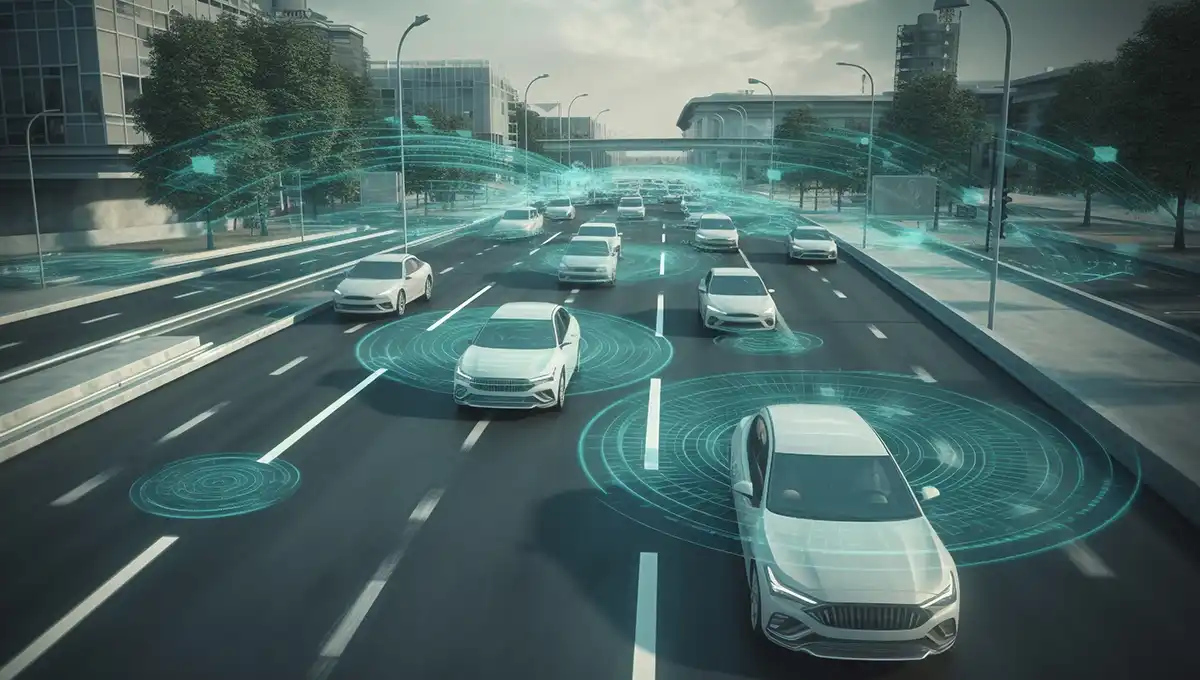
Autonomous Vehicles Exploring Technology, Safety, and the Future of Self-Driving Cars
Picture yourself in an autonomous car, driving itself without your hands on the wheel or your eyes on the road, and yet feeling completely safe and smooth.
What was once the stuff of science fiction is quickly becoming reality as cars develop from traditional vehicles into highly intelligent machines that can drive themselves through complex environments with ease.
The key to this revolution is the development of artificial intelligence and sophisticated software systems that work together in perfect harmony to read the world around them second by second.
This blog explores the world of autonomous vehicles, including how they work and what this technology means for the future of safety and convenience. If you’ve ever been curious about how self-driving cars actually work, you’re in the right place.
What Are Autonomous Vehicles?
Autonomous vehicles are designed to function without human intervention, using sophisticated sensors, software, and computing capabilities to detect their surroundings and make decisions in real-time. These vehicles are capable of driving on roads, reacting to obstacles, and dealing with traffic situations on their own.
Key Benefits:
- Improved Safety: Autonomous vehicles continuously scan the surroundings, eliminating the possibility of human error, which is the primary cause of accidents.
- Increased Efficiency: Sophisticated route planning and real-time traffic analysis enable faster travel and reduced fuel consumption.
- Convenience and Accessibility: Autonomous capabilities enable passengers to engage in other activities while traveling, making transportation more convenient and accessible.
Autonomous vehicles use AI, sensors, and smart algorithms to revolutionize transportation, providing safer, more efficient, and convenient ways to travel.
Artificial Intelligence The Brain Behind Self‑Driving Cars
Artificial intelligence (AI) is the pulse of autonomous driving systems, as it is able to process enormous amounts of data from sensors to make sense of the environment, including other vehicles, pedestrians, and traffic lights.
AI handles perception (sense-making of the environment), prediction (predicting the trajectory of objects), and planning (actions like braking, turning, or accelerating).
The current state-of-the-art technology combines neural networks with real-time processing for improved outcomes. AI learns from driving experience in the form of millions of miles and adjusts its performance accordingly.
Using data from multiple sensors provides a better understanding of the environment than a single sensor could offer.
The Role of LiDAR in Autonomous Systems
LiDAR is an essential technology in autonomous vehicles, allowing for accurate 3D perception and improving navigation, safety, and overall system reliability.
- Definition: LiDAR (Light Detection and Ranging) uses laser pulses and calculates the time of return to provide a detailed 3D representation of the environment.
- Accuracy: Assists vehicles in accurately determining the distance, shape, and location of objects in real-time.
- Advantage over Cameras: More accurate in depth and range detection, particularly in low-light conditions.
- Safety & Redundancy: Complements cameras and radar systems to enhance the reliability of perception and minimize blind spots.
- Emerging Enhancements: Miniaturized, affordable LiDAR with increased processing speed is making it more viable for mainstream use.
- Effect on Navigation: Improves the capability of autonomous systems to navigate through complex spaces and raises the confidence level in autonomous operations.
Breakthroughs in LiDAR technology make autonomous vehicles smarter, safer, and more efficient, greatly improving their ability to navigate complex environments.
Advanced Driver Assistance Systems (ADAS) Explained
Advanced Driver Assistance Systems, or ADAS for short, are systems that use technology to help drivers and improve safety. ADAS systems are often viewed as a precursor to fully autonomous vehicles, as they offer automated assistance for certain tasks but still require human control.
- Some of the ADAS systems include:: Adaptive Cruise Control: This system automatically adjusts the speed of the vehicle to maintain a safe distance from the vehicle in front of it.
- Lane Centering Assistance: This system helps to keep the vehicle centered in its lane by making small adjustments to the steering wheel as needed.
- Automatic Emergency Braking: This system detects an impending collision and applies the brakes to mitigate or prevent the impact.
- Blind Spot Monitoring: This system warns the driver of the presence of other vehicles in the adjacent lanes to prevent unsafe lane changes.
These systems use sensors such as cameras and radar, and in some cases, LiDAR, to detect the surroundings. Although ADAS does not autonomously control the vehicle, it does assist the driver by taking control of certain tasks when conditions allow.
ADAS systems are constantly improving and increasing in capability, slowly but surely approaching the level of full autonomy.
Automotive Navigation and Intelligent Traffic Systems
Autonomous vehicle navigation systems are more advanced than conventional mapping and GPS routing. They combine high-definition mapping, real-time traffic information, and vehicle sensor data to provide accurate route planning.
Such systems allow vehicles to accurately locate themselves on the road and predict what is about to happen, such as the approach to an intersection or junction.
Smart traffic systems are based on communication between vehicles and the traffic infrastructure, including traffic lights and road sensors.
Such communication enables the optimization of traffic flow and the reduction of congestion and related safety issues.
The use of connected technologies enables vehicles to respond to changing conditions, including rerouting as needed and coordinating with the surrounding traffic infrastructure for smooth flow.
The combination of vehicle data with traffic management systems improves efficiency, allowing for better routing and minimizing delays for all road users.
Safety, Regulation, and Deployment Challenges
Safety, regulations, and deployment issues are important considerations for autonomous vehicles, ensuring reliability, security, and trust in emerging autonomous vehicle technology.
- Safety:- Safety is the number one concern in autonomous vehicles. They are thoroughly tested to ensure that all perception and decision-making systems, as well as fail-safe redundancies, work well in a variety of real-world scenarios.
- Regulation:- Regulations are used in the deployment, licensing, and adherence to stringent performance requirements. The approval process is used to validate software while ensuring a proper balance between innovation and safety for the public.
- Deployment Challenges:- Autonomous technology is faced with challenges like edge cases and cybersecurity attacks. Regular updates, thorough validation, and cooperation between manufacturers, developers, and safety experts are required to ensure trust and functionality.
These issues must be addressed through testing, regulation, and collaboration to ensure safe and efficient deployment of autonomous vehicles.
Looking Ahead With The Future of Mobility
The development of autonomous vehicles is moving at a fast pace with the help of AI, sensors, and connectivity, making it possible to achieve a higher level of automation in complex driving scenarios.
Self-charging electric vehicles leverage autonomy and energy management, making it possible to reduce dependence on conventional charging. Connectivity between vehicles and the traffic infrastructure is improving safety and traffic flow.
The integration of autonomous technology with the transportation infrastructure is expected to make travel safer, more convenient, and accessible.
Conclusion
Autonomous vehicles are one of the most exciting and innovative areas of modern mobility, combining intelligent systems with advanced sensing and navigation capabilities to create a new way of thinking about how people and goods can move from point to point.
Whether it’s through improved safety capabilities, better decision-making, or improved navigation, these technologies are changing the way we think about travel and transportation.
As these technologies continue to advance, being up to date on the latest developments can help you get the most out of these technologies and understand what they mean for your life.
If you’re interested in learning more about how these technologies might impact your next car purchase or the future of transportation, there are additional resources available to help you stay on the cutting edge of innovation.
FAQ’s
- Are there any fully autonomous cars?
No fully autonomous (Level 5) cars are commercially available yet. Current vehicles offer advanced driver-assistance but still require human oversight. - What company is leading in autonomous vehicles?
Waymo, owned by Alphabet, leads autonomous vehicle development with extensive testing, followed by Cruise, Tesla, and traditional automakers investing heavily. - Is Tesla an autonomous car?
Tesla offers advanced driver-assistance features like Autopilot and Full Self-Driving, but requires driver supervision and isn’t fully autonomous currently. - Can a cop pull over a driverless car?
Yes, police can pull over autonomous vehicles. Companies program cars to respond to emergency lights, and remote operators can assist authorities.