


Artificial intelligence has become a practical business tool rather than an emerging technology. Organizations of every size are using AI to automate repetitive work, improve customer experiences, analyze large datasets and make faster decisions. From generating marketing content to predicting customer behavior, AI platforms are helping businesses reduce costs while improving productivity.
However, choosing the right AI platform is not as simple as selecting the most popular name. Some platforms are designed for developers building machine learning models, while others focus on business automation, customer service or data analytics. Features, pricing, security, scalability and integration capabilities all vary significantly.
This article explains what AI platforms are, how they work, the features that matter most and which solutions are best suited for different business needs. Whether you’re a startup exploring AI for the first time or an enterprise planning large-scale AI adoption, understanding these platforms will help you make a more informed investment.
What Are AI Platforms?
An AI platform is a software environment that enables businesses to build, deploy, manage, and scale artificial intelligence applications from a single ecosystem. Instead of developing machine learning infrastructure from scratch, organizations can use pre-built tools, APIs, and cloud services to accelerate AI projects.
Modern AI platforms support a wide range of technologies, including:
- Machine learning (ML)
- Deep learning
- Natural language processing (NLP)
- Computer vision
- Predictive analytics
- Generative AI
- AI agents
- Large Language Models (LLMs)
Many platforms also provide ready-to-use AI services for businesses that do not have dedicated data science teams. These services simplify everything from chatbot creation to document analysis and workflow automation.
For example, a retail company might use an AI platform to recommend products, forecast inventory, detect fraud and automate customer support, all within the same environment.
How Do AI Platforms Work?
Although every provider offers unique capabilities, most AI platforms follow a similar workflow.
1. Data Collection
AI models require quality data before they can generate meaningful insights. Platforms connect to databases, cloud storage, CRMs, ERP systems, websites, IoT devices, and third-party applications to collect structured and unstructured information.
Examples include:
- Customer purchase history
- Sales reports
- Website analytics
- Support tickets
- Images
- Audio recordings
- Documents
2. Data Preparation
Raw data often contains duplicates, missing values, or formatting issues. AI platforms include tools that clean, organize, and transform information into datasets suitable for training machine learning models.
Good data preparation significantly improves model accuracy.
3. Model Training
Once data is ready, the platform trains AI models using algorithms appropriate for the business objective.
Common training tasks include:
- Predicting future sales
- Detecting fraudulent transactions
- Classifying customer reviews
- Recommending products
- Forecasting demand
- Identifying equipment failures
Businesses can either build custom models or use pre-trained foundation models to reduce development time.
4. Model Deployment
After testing, AI models are deployed into production where they begin supporting real business operations.
Deployment options include:
- Cloud infrastructure
- Private cloud
- Hybrid cloud
- On-premises servers
- Edge devices
This flexibility allows organizations to meet security, compliance, and performance requirements.
5. Continuous Monitoring
AI models improve over time through continuous monitoring and retraining.
Most enterprise AI platforms track:
- Prediction accuracy
- Data drift
- Model performance
- Response times
- User feedback
- Security events
Monitoring ensures models remain reliable as business conditions change.
Why Businesses Are Investing in AI Platforms
AI adoption is accelerating because organizations need faster insights and greater operational efficiency.
Businesses commonly use AI platforms to:
- Automate repetitive administrative tasks
- Improve customer service with intelligent chatbots
- Generate reports and summaries
- Analyze customer behavior
- Forecast demand
- Detect cybersecurity threats
- Personalize shopping experiences
- Support employee productivity
- Improve supply chain planning
- Reduce operational costs
Instead of replacing employees, AI often handles repetitive work, allowing teams to focus on higher-value tasks such as strategy, creativity and decision-making.
Key Features of the Best AI Platforms
Not every AI platform offers the same capabilities. Evaluating the following features can help you identify a solution that aligns with your business goals.
1. Scalability
Business needs evolve over time, and your AI platform should grow alongside them. A scalable platform can process increasing amounts of data, support more users, and handle additional workloads without sacrificing performance.
Cloud-based platforms typically offer the flexibility needed to expand resources on demand.
2. Machine Learning Development Tools
Businesses building custom AI applications should look for platforms that provide:
- Model training environments
- Automated machine learning (AutoML)
- Experiment tracking
- Version control
- Model deployment tools
These features simplify development and reduce time to market.
3. Generative AI Support
Generative AI has become a core capability for modern businesses.
Leading AI platforms now support:
- AI writing assistants
- Code generation
- Image creation
- Document summarization
- Content translation
- Virtual assistants
- AI-powered search
This functionality allows businesses to automate knowledge-intensive work while improving productivity.
4. Integration Capabilities
An AI platform should connect easily with existing business software.
Strong integration options include:
- CRM systems
- ERP platforms
- Marketing automation software
- Cloud storage
- Business intelligence tools
- APIs
- Databases
- Collaboration platforms
Smooth integration minimizes disruption while improving workflow efficiency.
5. Security and Compliance
Organizations handle sensitive customer and business information every day.
Enterprise-grade AI platforms should provide:
- Data encryption
- Role-based access control
- Identity management
- Audit logs
- Compliance certifications
- Secure APIs
- Threat monitoring
Industries such as healthcare, finance, and government often require advanced compliance features to meet regulatory standards.
6. Automation Capabilities

Automation remains one of the biggest reasons businesses adopt AI.
Useful automation features include:
- Workflow automation
- Document processing
- Customer support
- Invoice processing
- Predictive maintenance
- Data entry
- Email classification
- Intelligent recommendations
Automating repetitive work helps reduce errors while improving productivity.
7. Analytics and Business Intelligence
Advanced AI platforms combine artificial intelligence with business analytics.
Key capabilities include:
- Predictive analytics
- Real-time dashboards
- Forecasting
- Trend detection
- Customer segmentation
- Performance monitoring
- Data visualization
These insights help business leaders make faster and more informed decisions.
8. Ease of Use
Not every organization has experienced AI engineers.
The best AI platforms support both technical and non-technical users through:
- No-code interfaces
- Low-code development
- Drag-and-drop workflows
- Pre-trained AI models
- Guided model creation
- Visual dashboards
This accessibility allows departments such as marketing, finance, HR, and operations to benefit from AI without extensive programming knowledge.
Types of AI Platforms
Understanding the different categories of AI platforms makes it easier to choose the right solution for your organization.
| Platform Type | Best For | Examples |
| Cloud AI Platforms | Large-scale AI development | Google Vertex AI, Microsoft Azure AI, Amazon SageMaker |
| Generative AI Platforms | Content creation and automation | ChatGPT Enterprise, Claude, Gemini |
| Machine Learning Platforms | Building custom ML models | Vertex AI, Databricks, SageMaker |
| AI Business Platforms | Workflow automation | Microsoft Copilot, Salesforce Einstein |
| Open-Source AI Platforms | Flexible AI development | Hugging Face, TensorFlow, PyTorch |
| Industry-Specific AI Platforms | Healthcare, finance, manufacturing | IBM watsonx, Oracle AI, SAP Joule |
Different organizations often use multiple AI platforms together. For example, a company may rely on Microsoft Copilot for employee productivity, Google Vertex AI for machine learning development and ChatGPT Enterprise for content creation and knowledge management.
Best AI Platforms for Businesses in 2026
Choosing the right AI platform depends on your business goals, technical expertise, budget and existing technology stack. While some platforms are built for developers creating machine learning models, others focus on business productivity, automation, or generative AI.
Below are some of the leading AI platforms businesses should consider.
1. Gemini Enterprise Agent Platform (Google Vertex AI)
Best for: Enterprise machine learning and scalable AI development
Google Vertex AI combines Google’s machine learning services into a unified platform that simplifies building, training, deploying, and managing AI models. Businesses can work with custom models or leverage Google’s Gemini models for generative AI applications.
Key Features
- AutoML for faster model development
- Built in MLOps tools
- Support for Gemini models
- Data labeling and model evaluation
- Enterprise security
- Integration with Google Cloud services
Advantages
- Excellent scalability
- Strong AI research backing
- Powerful analytics capabilities
- Ideal for large datasets
Limitations
- Can be complex for beginners
- Premium features may increase costs
Best For
- Large enterprises
- Retail analytics
- Manufacturing
- Healthcare
- Financial services
2. Microsoft Azure AI
Best for: Organizations using Microsoft products
Azure AI integrates seamlessly with Microsoft 365, Dynamics, Power Platform and Azure Cloud, making it one of the easiest enterprise AI platforms to adopt.
Businesses can create chatbots, automate workflows, analyze documents, and build custom AI applications while maintaining enterprise-level security.
Key Features
- Azure OpenAI Service
- AI Search
- Computer Vision
- Speech services
- Document Intelligence
- AI Studio
- Responsible AI tools
Advantages
- Excellent Microsoft integration
- Enterprise-grade security
- Strong compliance support
- Easy deployment
Limitations
- Licensing can become expensive
- Some advanced features require technical knowledge
Best For
- Enterprises
- Government
- Financial institutions
- Healthcare organizations
3. Amazon SageMaker
Best for: Custom machine learning projects
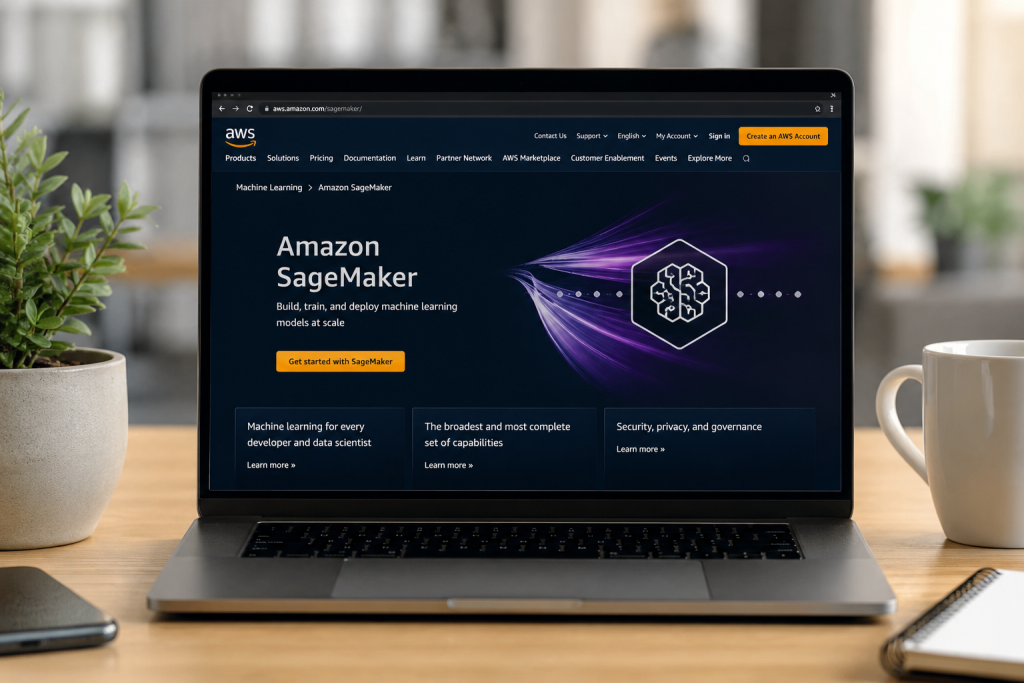
Amazon SageMaker helps organizations build, train, deploy, and monitor machine learning models using AWS infrastructure.
The platform supports many popular machine learning frameworks and offers automated model tuning for improved performance.
Key Features
- AutoML
- Built-in notebooks
- Feature Store
- Model Registry
- Real-time inference
- Batch predictions
Advantages
- Highly scalable
- Flexible deployment
- Strong developer ecosystem
- Extensive AWS integrations
Limitations
- Learning curve for new users
- Requires familiarity with AWS services
Best For
- Data science teams
- Large enterprises
- Predictive analytics
- AI application development
4. IBM watsonx
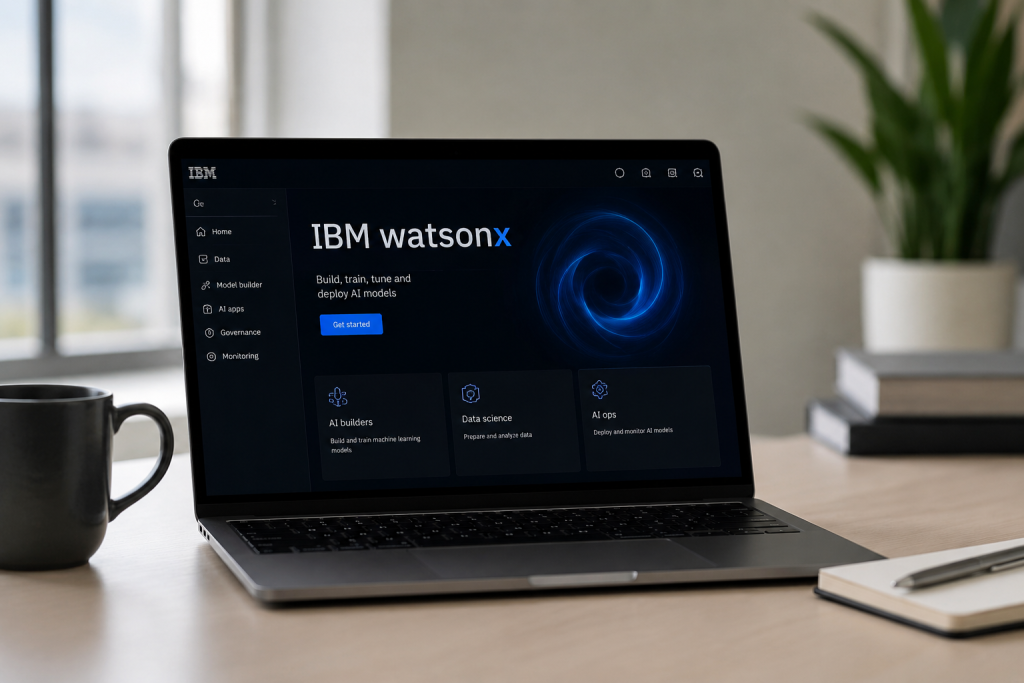
Best for: Regulated industries
IBM watsonx focuses on enterprise AI, governance, transparency and responsible AI development. It is particularly popular among businesses operating in highly regulated sectors.
Key Features
- Foundation models
- AI governance
- Model monitoring
- Data management
- Explainable AI
- Compliance tools
Advantages
- Strong security
- Responsible AI framework
- Excellent governance capabilities
- Enterprise-ready
Limitations
- More enterprise-focused than consumer-friendly
- Smaller ecosystem than AWS or Google
Best For
- Banking
- Insurance
- Healthcare
- Government agencies
5. OpenAI
Best for: Generative AI applications
OpenAI provides businesses with access to advanced language models that power chatbots, content creation, coding assistants, knowledge management systems and customer support automation.
Developers can integrate AI capabilities into websites, applications, and internal business systems through APIs.
Key Features
- GPT models
- API access
- Function calling
- Vision capabilities
- File analysis
- Enterprise security
Advantages
- Excellent language understanding
- Strong developer community
- Rapid innovation
- Easy API integration
Limitations
- Usage-based pricing
- Some advanced features require API implementation
Best For
- Marketing teams
- Customer support
- Software development
- Knowledge management
6. Anthropic Claude
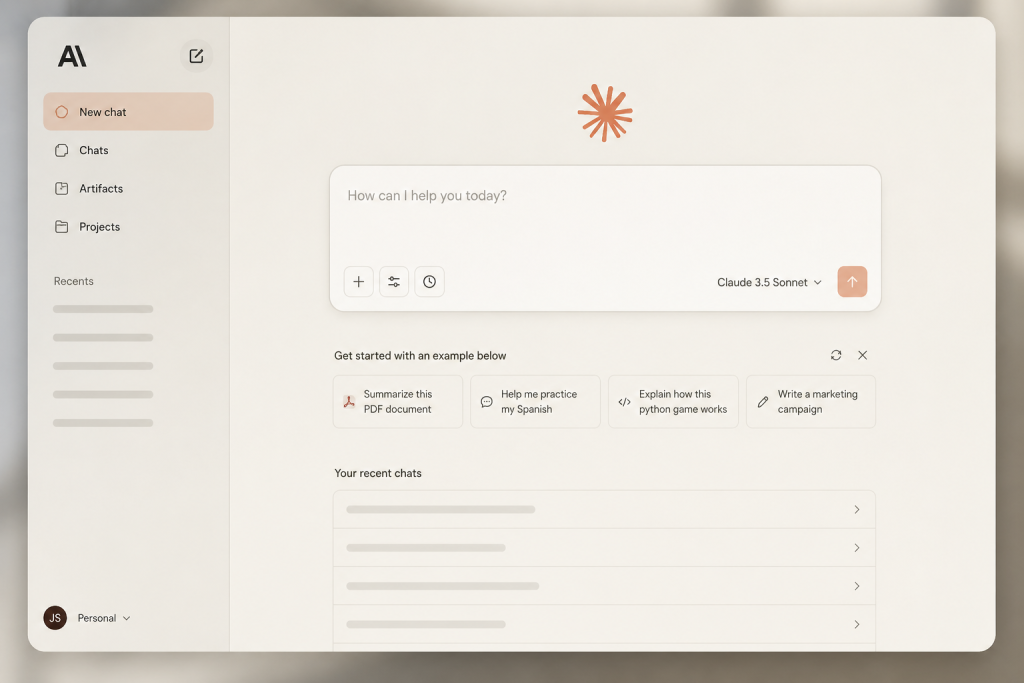
Best for: Long document analysis and enterprise safety
Claude is known for handling lengthy documents, detailed reasoning and business-focused AI assistance. Many organizations use it for legal reviews, research, compliance documentation and internal knowledge bases.
Key Features
- Long context window
- Strong reasoning
- Enterprise security
- API access
- Document analysis
- Workflow automation
Advantages
Excellent writing quality
Strong safety features
Reliable document processing
Limitations
- Smaller ecosystem compared to Microsoft and Google
- Limited integrations in some regions
Best For
- Legal firms
- Consulting
- Research organizations
- Enterprise documentation
7. Databricks AI Platform
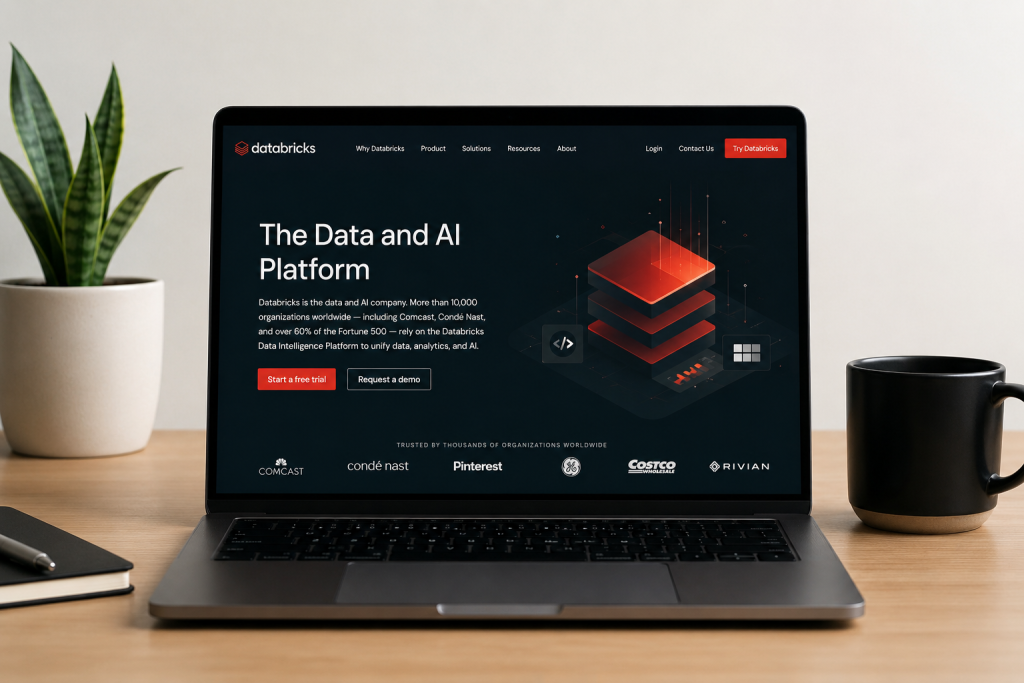
Best for: Data engineering and analytics
Databricks combines data engineering, analytics and AI development into a single platform, allowing organizations to work with structured and unstructured data efficiently.
Key Features
- Lakehouse architecture
- AI model training
- Collaborative notebooks
- MLflow integration
- Real-time analytics
Advantages
- Excellent for big data
- Strong collaboration tools
- Advanced analytics
Best For
- Data-intensive businesses
- Enterprise analytics
- Machine learning teams
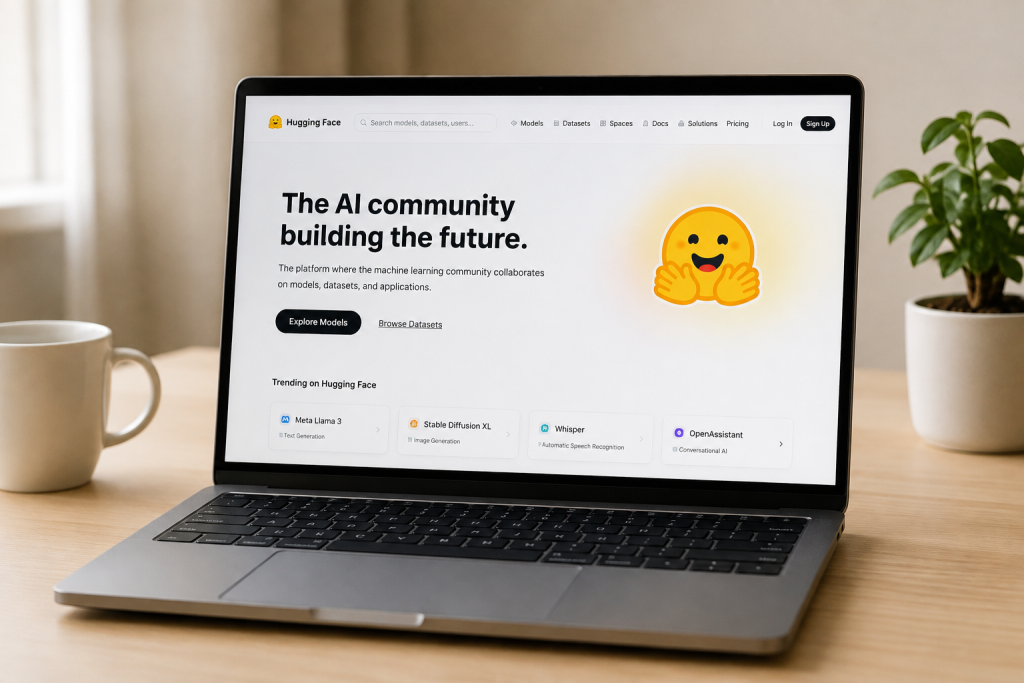
8. Hugging Face
Best for: Open source AI development
Hugging Face has become one of the largest communities for open source AI models. Businesses can access thousands of pre-trained models covering language, image generation, speech recognition and more.
Key Features
- Model Hub
- Transformers library
- Dataset hosting
- Community collaboration
- Open source ecosystem
Advantages
- Large collection of AI models
- Active developer community
- Flexible customization
Limitations
- Requires technical expertise
- Enterprise deployment needs additional infrastructure
Best For
- AI developers
- Research teams
- Startups
- Custom AI solutions
AI Platform Comparison
| Platform | Best For | Ease of Use | Scalability | Security | Free Option |
| Google Vertex AI | Enterprise AI | Medium | Excellent | Excellent | Limited |
| Microsoft Azure AI | Microsoft ecosystem | High | Excellent | Excellent | Limited |
| Amazon SageMaker | Machine learning | Medium | Excellent | Excellent | Limited |
| IBM watsonx | Regulated industries | Medium | Excellent | Excellent | Limited |
| OpenAI | Generative AI | High | Excellent | Strong | Yes |
| Claude | Document analysis | High | Strong | Excellent | Yes |
| Databricks | Data analytics | Medium | Excellent | Strong | Trial |
| Hugging Face | Open source AI | Medium | Strong | Depends on deployment | Yes |
Which AI Platform Is Right for Your Business?
Different businesses have different AI requirements. The table below can help narrow your options.
| Business Need | Recommended Platform |
| AI content creation | OpenAI, Claude |
| Enterprise productivity | Microsoft Azure AI, Microsoft Copilot |
| Custom machine learning | Google Vertex AI, Amazon SageMaker |
| Data analytics | Databricks |
| Regulated industries | IBM watsonx |
| Open source AI development | Hugging Face |
| Customer support automation | OpenAI, Azure AI |
| Predictive analytics | Vertex AI, SageMaker |
| Business intelligence | Azure AI, Databricks |
Common Business Use Cases
Organizations across industries are using AI platforms to improve efficiency and deliver better customer experiences.
Customer Service
AI-powered virtual assistants can answer routine questions, route support tickets, and provide 24-hour assistance, allowing human agents to focus on more complex issues.
Marketing
Marketing teams use AI to generate campaign ideas, personalize email content, optimize advertisements, analyze customer behavior, and improve search engine optimization strategies.
Finance
Financial institutions rely on AI to detect fraud, assess credit risk, automate invoice processing, and forecast revenue with greater accuracy.
Healthcare
Hospitals and healthcare providers use AI to assist with medical imaging, streamline administrative tasks, support clinical decision-making, and improve patient communication.
Manufacturing
Manufacturers apply AI to predictive maintenance, quality inspection, supply chain optimization, and production forecasting to reduce downtime and improve operational efficiency.
Human Resources
HR departments use AI to screen resumes, schedule interviews, answer employee questions, and identify workforce trends that support better hiring decisions.
Tips for Successful AI Implementation
Adopting an AI platform involves more than selecting the right software. Businesses should define clear objectives, prepare high-quality data, involve stakeholders across departments, and monitor AI performance after deployment. Starting with a focused pilot project allows teams to measure value, refine workflows, and expand AI initiatives with greater confidence.
How to Choose the Right AI Platform
With dozens of AI platforms available, selecting the right one requires more than comparing features. The best solution is one that aligns with your business objectives, technical capabilities, and long-term growth plans.
Before making a decision, evaluate the following factors.
1. Define Your Business Goals
Start by identifying the problems you want AI to solve.
For example:
- Automating customer support
- Generating marketing content
- Improving sales forecasting
- Detecting fraud
- Enhancing data analytics
- Building AI-powered applications
- Streamlining internal workflows
Having clear objectives helps narrow your options and prevents investing in features you may never use.
2. Evaluate Ease of Use
Not every business has an in-house AI team.
If your employees have limited technical experience, choose a platform that offers:
- No-code or low-code tools
- User-friendly dashboards
- Pre-built AI models
- Guided workflows
- Comprehensive documentation
Developer-focused platforms offer greater flexibility but usually require more technical expertise.
3. Consider Scalability
Your AI needs today may be very different in two or three years.
A scalable platform should support:
- Growing datasets
- More users
- Additional AI models
- Increased workloads
- Expansion across departments
Cloud-native platforms typically provide the flexibility required for long-term growth.
4. Review Security and Compliance
Businesses often process sensitive customer and operational data.
Look for platforms that provide:
- Data encryption
- Identity and access management
- Audit logs
- Compliance certifications
- Secure APIs
- Responsible AI controls
Industries such as healthcare, banking, and government should prioritize platforms with strong governance and regulatory compliance features.
5. Compare Integration Capabilities
An AI platform should work seamlessly with your existing software ecosystem.
Check compatibility with:
- CRM systems
- ERP software
- Cloud storage
- Collaboration tools
- Business intelligence platforms
- Marketing automation software
- APIs and databases
Smooth integration reduces implementation time and minimizes workflow disruptions.
6. Understand the Pricing Model
AI platform pricing varies widely.
Common pricing structures include:
- Free tier
- Monthly subscription
- Usage-based pricing
- Enterprise licensing
- Pay-as-you-go API billing
When comparing costs, consider more than the subscription fee. Factor in implementation, employee training, storage, compute resources, and ongoing maintenance to estimate the total cost of ownership.
AI Platform Pricing Overview
| Platform | Pricing Model | Best For |
| Google Vertex AI | Pay as you use | Large enterprises |
| Microsoft Azure AI | Consumption based | Microsoft ecosystem |
| Amazon SageMaker | Usage based | Machine learning projects |
| IBM watsonx | Enterprise licensing | Regulated industries |
| OpenAI | API and subscription | Generative AI applications |
| Claude | Subscription and API | Knowledge workers |
| Databricks | Consumption based | Data analytics |
| Hugging Face | Free and enterprise plans | Open-source AI development |
Pricing can change over time, so reviewing each provider’s latest plans before committing is recommended.
Common Mistakes Businesses Make When Choosing AI Platforms
Many organizations invest in AI without a clear strategy, leading to unnecessary costs and disappointing results.
Avoid these common mistakes:
Choosing Based Only on Popularity
The most well-known platform isn’t always the best fit. Focus on your business requirements rather than market hype.
Ignoring Data Quality
Even the most advanced AI platform cannot produce reliable results from poor-quality data. Clean, accurate, and well-structured data is essential for successful AI projects.
Underestimating Integration Challenges
An AI platform that doesn’t integrate with your existing systems can increase implementation costs and reduce efficiency.
Overlooking Employee Training
Employees need time and guidance to adopt AI tools effectively. Investing in training often leads to higher productivity and better long-term results.
Neglecting AI Governance
Organizations should establish clear policies for privacy, security, ethical AI use, and regulatory compliance before deploying AI at scale.
Future Trends in AI Platforms
Artificial intelligence continues to evolve rapidly, and businesses that stay informed about emerging technologies will be better positioned to remain competitive.
Agentic AI
AI agents are becoming more autonomous, capable of planning tasks, using software tools, and completing multi-step workflows with minimal human intervention.
Multimodal AI
Modern AI platforms increasingly understand and generate text, images, audio, video, and code within a single model, enabling richer business applications.
Retrieval-Augmented Generation (RAG)
RAG combines large language models with an organization’s internal knowledge base, allowing AI systems to deliver more accurate, up-to-date, and context-aware responses.
Smaller and Specialized AI Models
Businesses are beginning to adopt compact AI models that require fewer computing resources while delivering strong performance for specific tasks.
Responsible AI
Transparency, fairness, explainability, and regulatory compliance are becoming essential considerations as governments introduce new AI regulations.
AI Copilots Across Every Department
From finance and human resources to marketing and software development, AI copilots are becoming standard productivity tools that assist employees with everyday work.
Edge AI
Running AI models directly on local devices reduces latency, improves privacy, and enables real-time decision-making in manufacturing, healthcare, and IoT environments.
Final Thoughts
Artificial intelligence is reshaping how organizations operate, compete, and innovate. Whether your goal is improving customer experiences, automating repetitive tasks, generating business insights or building intelligent applications, selecting the right AI platform can have a lasting impact on productivity and growth.
Rather than focusing solely on brand recognition, evaluate each platform based on scalability, security, integration capabilities, ease of use and long-term value. A well-planned implementation, supported by quality data and clear business objectives, will deliver far greater results than adopting AI simply because it is trending.
As AI technology continues to evolve, businesses that embrace flexible, responsible and scalable platforms will be better prepared to adapt to changing market demands and unlock new opportunities for innovation.
Frequently Asked Questions
What is the future of AI platforms?
Future AI platforms will focus on autonomous AI agents, multimodal capabilities, Retrieval-Augmented Generation (RAG), edge AI, responsible AI and deeper integration into everyday business workflows.
What should businesses consider before adopting AI?
Organizations should define clear business goals, prepare high-quality data, evaluate integration requirements, establish governance policies, and provide employee training to maximize the value of AI investments.
What industries benefit most from AI platforms?
Healthcare, finance, retail, manufacturing, education, logistics, marketing, customer service, and professional services all use AI platforms to improve efficiency, automate processes and make better business decisions.
Can AI platforms integrate with existing business software?
Yes. Most modern AI platforms support integrations with CRM systems, ERP software, cloud storage, productivity tools, databases, and third-party applications through APIs and connectors.
Are AI platforms secure?
Leading AI platforms include enterprise-grade security features such as encryption, access controls, audit logging, and compliance certifications. Organizations should still review each provider’s privacy policies and security practices before deployment.
Which AI platform is best for small businesses?
Small businesses often benefit from platforms with simple interfaces and affordable pricing, such as ChatGPT, Microsoft Copilot, Claude, or Google Gemini, depending on their specific use cases.
What is the difference between AI software and AI platforms?
AI software usually performs a specific task, such as content generation or image recognition. AI platforms provide a broader environment for developing, deploying, managing, and integrating multiple AI applications.
Is ChatGPT an AI platform?
ChatGPT is an AI application powered by OpenAI’s language models. Through OpenAI’s APIs and enterprise offerings, businesses can integrate generative AI capabilities into their own applications and workflows.
Which AI platform is best for businesses?
The best platform depends on your requirements. Google Vertex AI and Microsoft Azure AI are excellent for enterprise AI, OpenAI and Claude are ideal for generative AI, while Amazon SageMaker is well suited for custom machine learning projects.
What is an AI platform?
An AI platform is a software environment that enables businesses to build, deploy, manage, and scale artificial intelligence applications using tools for machine learning, automation, analytics and generative AI.